
Automation
Automation Systems, EOL Inspection, Manipulators
Each environment shaped a different perspective on how products are designed, developed, and experienced.
Automation Systems, EOL Inspection, Manipulators
Customer Empathy, Service Delivery, Communication
Precision Engineering, 3D Scanning, Inspection
User Experience, Customer Experience, Product Launch
Operational Transformation, Reduce waste, Mentorship & Training
The roles and environments that shaped this journey.
CAD Technician & CNC Programmer
CAD Technician
CAD Technician
Product Application & Technical Support Engineer
CAD Technician
CAD Technician
Technical Support Engineer
Process Engineer (Consultant)
Robbie Deyzel Engineering brought me back in a strategic role focused on reducing waste, improving operator workflows, and modernizing legacy manufacturing systems.
The engagement was consultative by design but required hands-on intervention across production, training, and operational processes.
I approached the facility as an interconnected system rather than isolated technical tasks — contributing to space recovery, workflow visibility, cost optimization, training, compliance improvements, and targeted engineering support where needed.
Visible Lean Transformation
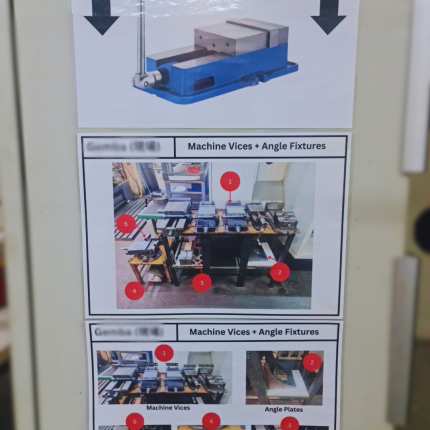
I audited legacy tooling, scrap, and broken equipment accumulated over years, then led a cleanup that removed the equivalent of 12 pickup trucks of unnecessary material. That reclaimed floor space for growth, reduced walking distances, and created visible momentum inside the business.
Operator-centered workflow improvement
I introduced dedicated workbenches, tool brackets, a visual CONE status system, a full facility map in SolidWorks, and structured maintenance scheduling. These changes improved at-a-glance visibility, reduced searching and motion waste, and made the shop feel more understandable to the people working inside it.
Strategic cost and capability gains
I negotiated three SolidWorks Professional licenses, saving ZAR 267,120 over a 3 year term.
Secured marketing sponsorship valued at ZAR 29,000 and supported the acquisition of a larger CNC machine while helping decommission obsolete equipment to recover space.
Training and internal capability building
I trained an employee from zero to independent basic 3D modeling in SolidWorks and built automated CAD templates to reduce drawing errors and save drafting time. I also updated OHS documentation and provided tactical support across scanning, machining, purchasing, and technical communication when needed.
Engineering Software
SolidWorks
– Parametric CAD modeling
– 2D manufacturing drawings
– Design for manufacturing (DFM)
Geomagic Design X
– 3D Scan to CAD modeling
– Reverse Engineering
GearTeq
– Gear profile generation
– Planetary gear set generation
Camworks
– CNC Mill Programming
Hardware & Machines
CNC Mill
– HAAS TM2P “NGC Controller”
3D Scanners
– Structured light scanning
– Laser scanning
3D Printer
– Wanhao “FDM Technology”
Inspection
– Optical comparator
Process & Documentation
Flow
– Workflow visibility systems (CONE status system)
– Manufacturing documentation improvement “AutoFill Solidworks”
– Shop-floor engineering liaison
Compliance
– OHS documentation updates
Business Impact Areas
– Production visibility
– Cost reduction
– Operator workflow optimization
– Floor-space recovery
After my first tenure with Revopoint, I was invited back in an advisory capacity.
The role focused less on direct execution and more on transferring practical knowledge into the company — how users actually judge products, how support and marketing should respond to real-world expectations, and how internal teams can think beyond scripted support responses.
Cross-Team Knowledge Transfer
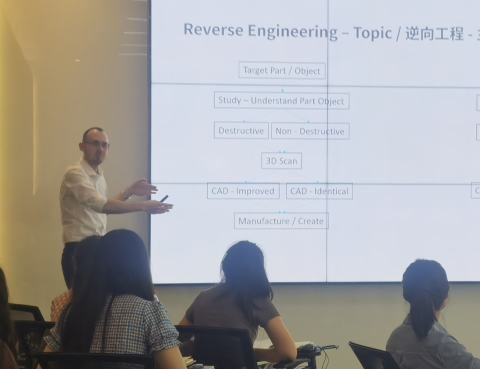
I delivered structured sessions with slides, live demos, and Q&A that helped 9 team members across customer service, sales, and marketing become more independent and more context-aware in how they handled users.
User-Centered Product Communication
I gave feedback on campaigns based on actual customer misunderstandings, prior sentiment, and real scanning limitations. That helped push communication toward clearer expectations and more user-centered framing.
Product Guidance Grounded in Real-World Use
I also provided light testing, product guidance, and indirect support input, translating real scanning workflows into teachable patterns for internal teams.
This role marked an important shift — from helping build and explain the product to helping the organization think more clearly about the people using it.
Communication & Collaboration
– DingTalk
– Zoom
– Cross-team knowledge transfer
– Bi-weekly lecture sessions
– Q&A-based team training
Marketing & Product Communication
– Campaign review and feedback
– User-centered messaging
– Ethical product communication
– Real-world limitation framing
Support & Customer Insight
– Zendesk
– Customer query pattern analysis
– Empathetic response frameworks
– Support guidance through internal teams
– User perception mapping
Product & Workflow Guidance
– RevoScan
– Real-world workflow demonstrations
– Product testing and scenario validation
– 3D Scanner application guidance
– Market-sector use case explanation
Business Impact Areas
– Team independence
– Better customer understanding
– Clearer product communication
– Reduced dependence on individual experts
– Stronger trust-based product guidance
Revopoint marked the point where my work moved from individual machines and custom projects into a global product ecosystem. The role began after direct outreach aligned with the company’s mission of making advanced 3D scanning more accessible.
I worked across support systems, software workflows, product testing, reseller training, exhibitions, launch materials, and strategy discussions. It was a hybrid role that required technical depth, communication, and the ability to translate friction from the field into meaningful internal action.
Support burden reduction
Reduced specialized technical support from roughly 70 daily escalations/tags to a much smaller flow through templates, macros, improved documentation, and stronger knowledge transfer.
Unified software experience
I pushed toward a more unified RevoScan platform, contributing usability improvements around processing, detail handling, and overall clarity. This work strengthened the software side of a growing hardware ecosystem and helped establish a foundation for scaling and user adoption.
Product launch influence across multiple scanners
Supported product launches and public-facing materials across POP 2, MINI + MINI 2, RANGE + RANGE 2, and MIRACO — including testing, demonstrations, feedback, training, and expectation-setting.
Realism during critical launch moments
I helped counter negative sentiment and unrealistic expectations during the MINI launch and the MIRACO phase by grounding discussions in actual scans, practical limitations, and credible demonstrations rather than hype.
Communication & Collaboration
– DingTalk
– User & Product Documentation updates
– Reseller and partner training
– Zendesk
– Customer onboarding support
Marketing & Product Communication
– Product demonstrations
– Technical review of launch materials
– Website and campaign feedback
– Expectation-setting through real examples
– Practical use-case communication
Scanning & Product Software
– RevoScan 4 / 5
– RevoStudio
– Workflow validation across scanner types
– Scan quality evaluation
– Software compatibility testing
Product Testing & Validation
– Real-world workflow testing
– Cross-software comparison testing
– Scenario-based product evaluation
– Field feedback interpretation
Cross-Functional Collaboration
– Feedback to product teams
– Collaboration with industrial designers
– Leadership discussions on product direction
– Marketing and sales support
– User-to-development communication loops
Business Impact Areas
– Support burden reduction
– User onboarding improvement
– RevoScan UI change & workflow refinement
– Product launch support
– Stronger trust through realistic communication
LNF specialized in what happens after scanning: reverse engineering, inspection, and CAD optimization for manufacturability. That made it a perfect counterpoint to my work with Revopoint.
On one side I was helping shape scanning technology; on the other I was helping translate scanned data into geometry that could actually work in real industrial production.
Production continuity through reverse engineering
I converted worn or undocumented parts into parametric CAD models optimized for CNC and forming, with realistic tolerances and geometry.
Legacy CNC revival
I revived a 1995 Alpha Harris CNC lathe by reverse-engineering its control language, creating a custom post-processor, and integrating it into a modern workflow. That restored in-house production to machine roughly 40 roll-forming tools for a specific project.
Inspection repeatability
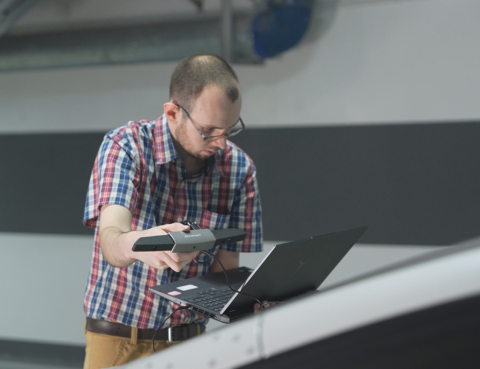
I created inspection workflows using FARO-arm-based measurement, scan-to-CAD alignment, and custom 3D-printed fixtures for free-form parts. That improved repeatability, reduced operator error, and made decisions clearer for clients.
New domain adaptability
I modeled a tubular race car chassis for the first time, structuring the CAD in a way that mirrored real welding and fabrication logic — an example of adapting quickly to a new physical design domain.
Reverse-engineered tubular race chassis
Reverse Engineering & CAD
– SolidWorks
– Geomagic Design X
– PointShape Design
– Parametric CAD reconstruction
– Scan-to-CAD workflows
Inspection & Measurement
– Geomagic Control X
– FARO arm (PCMM)
– Deviation reporting
– Inspection workflow development
CNC & Manufacturing Integration
– FeatureCAM
– CIMCO Edit
– CAM-friendly geometry preparation
– Surface simplification for machining
– Legacy CNC post-processor adaptation
Scanning & Physical Capture
– Shining Pro HD
– ExScan Pro
Fixture & Process Development
– FDM 3D printing
– Cura
– Custom inspection fixtures
– Error-risk reduction through fixturing
Engineering & Production Context
– Forming-tool geometry
– Production continuity support
– Client-facing technical reporting
Business Impact Areas
– Reduced outsourcing
– In-house capability recovery
– Repeatable inspection workflows
This return to Robbie Deyzel was not about simply producing parts. It focused on stabilizing a company during a knowledge transition: preserving undocumented history, restoring dormant machine capability, and improving shop-floor information systems before they broke down further.
Knowledge preservation
I documented 16 years of jigs, fixtures, and CAM history, organizing information that had previously lived mostly in one person’s memory. That prevented loss of institutional knowledge and made future reuse possible.
Machine capability recovery
I retrofitted an obsolete HAAS HRT210 into a working indexer for the TM1 mill, enabling spline and gear-related work while reducing repeated manual interruptions.
Digital workflow improvement
I designed and wireframed job-tracking system to replace manual pen-and-paper time recording, improving visibility and laying the groundwork for better scheduling.
Critical reverse engineering support
I reverse-engineered components for marine, pet-food, and dairy-related applications so that worn or unavailable parts could be remanufactured with the right tolerances and hygiene considerations.
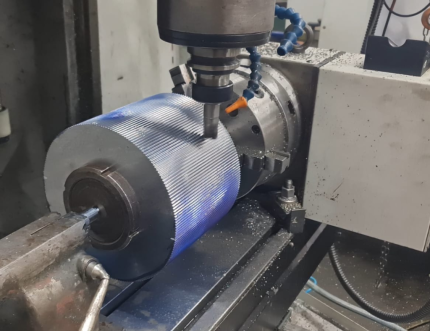
Knowledge Capture & Documentation
– Server-based job and fixture archiving
– Knowledge-base structuring
Reverse Engineering & CAD
– SolidWorks
– Fusion 360
– Geomagic Design X
– Manufacturing drawing preparation
CNC Retrofit & Machine Recovery
– HAAS TM1
– Macro-based indexing control
– M-code integration
Business Impact Areas
– Knowledge preservation
– Machine capability recovery
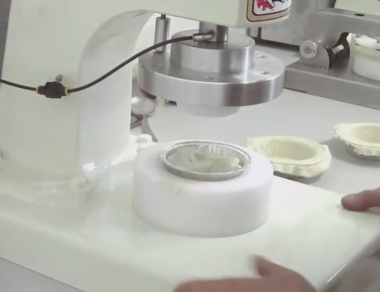
My first Robbie Deyzel engagement was shorter, faster, and more hands-on. I took full ownership from sample analysis, reverse engineering, CAD, CAM, and machining, moving between food manufacturing tooling and automotive defect correction.
Food tooling under real production pressure
I designed and machined pastry press tooling using aluminium, stainless steal and HDPE, adding clearances and relief tapers to improve dough flow, release, and production consistency.
Critical defect correction
I reverse engineered a failed automotive coil spring seat, traced the issue back to undersized blank geometry from stamping, and supplied corrected reference geometry to prevent future production failures.
Digital workflow improvement
Collaboratively designed and wireframed a job-tracking system to replace manual pen-and-paper time recording, improving operational visibility and laying the groundwork for better production scheduling.
Adaptation
Learning unfamiliar machine controls and creating post-processors while designing pastry form tools — demonstrating rapid adaptation to new machines and manufacturing contexts.
Kamp en Braai was where my industrial background met direct consumer reality. The business focused on 4×4 and camping products, installations, and custom vehicle solutions, with an emphasis on reversible, non-permanent modifications that helped people travel further without permanently altering their vehicles.
The role ran concurrently with DNH, and that mattered: I was learning manufacturing discipline in one environment while learning customer empathy in another. Instead of being told what the system needed, I was now asking customers what they liked, how they packed, what felt useful, and what created pride of ownership.
User-driven customization
Translated customer needs into removable protection systems, storage solutions, enclosures, and related vehicle modifications through scanning, CAD, BOM generation, and handover to fabrication.
Trust and willingness to travel
The work contributed to strong customer trust, including clients traveling 700 km or more and spending up to ZAR 1,000,000 on single transactions.
Exhibition-led learning
Learned that physical interaction often mattered more than social attention, which pushed designs toward compact, removable, tactile solutions that made sense in real use rather than only in presentation.
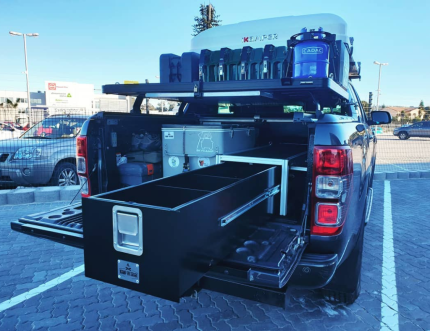
Customer & Product Discovery
– Customer requirement discussions
– Fitment and space-use evaluation
– Feedback-based design refinement
CAD & Product Design
– SolidWorks
– Sheet-metal design
– Aluminium extrusion design
– Vehicle accessory and enclosure design
– DXF preparation for laser cutting
Manufacturing Preparation
– Bill of materials generation
– Material selection support
– Purchase order preparation
– Fabrication handover
– Design-for-manufacturability decisions
Workflow & Delivery
– Exhibition-based market insight
– Dual-role time management
– Travel-based on-site scanning
Product Experience Focus
– Reversible / non-permanent modifications
– Practical storage and protection systems
Business Impact Areas
– Customer trust
– High-value custom builds
– Manufacturable custom solutions
DNH was the foundation of everything that came after. It was a lean turnkey automation company building bespoke production machines for major automotive manufacturers in a 14-person environment where roles overlapped and ownership mattered more than titles. I entered as a CAD technician and grew into a cross-functional role moving between design, machining, inspection, testing, documentation, and problem-solving under real deadline pressure.
This was not narrow CAD work. The role stretched from concept support and sourcing through 3D design, 2D manufacturing drawings, CNC programming, CNC setup and running, inspection, stress testing, and post-build documentation. It also included UX improvements inside internal systems and shop-floor workflows.
End-to-end automation delivery
I contributed to 11 end-to-end automation projects for automotive OEM environments, including tooling, manipulators, fixtures, and assembly-related equipment.
CNC takeover and setup logic
When the previous CNC programmer left, I took over programming and modeled complete fixture and clamp setups in SolidWorks to reduce errors and improve handover clarity.
Pre-production defect prevention
I caught distortion in Benteler control arms during inspection before production release and identified an overload condition in a Nissan tire-beading machine during stress testing that later proved real after installation.
Process and cost improvements
I helped cut face milling costs by 50%, unlocking more than ZAR 70,000 in insert value, while also improving manufacturability, drawing accuracy, and internal usability through better ERP indicators and fixture-screen feedback.
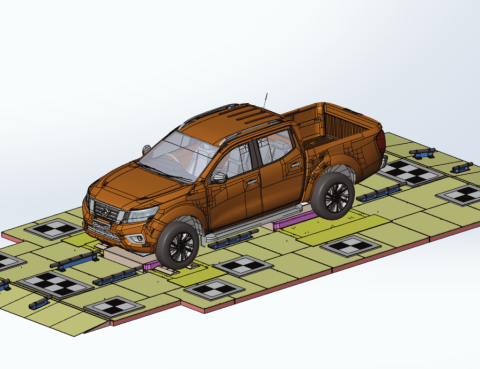
Design & Engineering
– SolidWorks
– 3D mechanical design
– Sheet-metal design
– Weldment and assembly design
– Design-for-manufacturability refinement
CNC Programming & Machining
– CAMWORKS
– Feeler FV1300 4 Axis
– Fanuc controller
Inspection & Quality Control
– CimCore Romer Stinger II
– Autodesk PowerInspect
– Fixture calibration support
– Pre-production defect detection
Automation Testing & Validation
– Stress testing
– Operator simulation
Documentation & Engineering Support
– Post-build drawing updates
– Service-manual support drawings
– Sourcing support for bought-out items
Cross-Functional Collaboration
– Design-to-machining coordination
– Mechanical and electrical team communication
– Shop-floor issue feedback loops
Business Impact Areas
– End-to-end automation delivery
– Manufacturing cost reduction
– Better setup clarity and handover
Taken together, these chapters show a career broader than a single function — yet still coherent.
I understand how products are shaped in factories.
How users judge them in the real world.
How precision and reverse engineering protect production continuity.
How product teams scale tools across markets.
And how better operational systems make all of that work more reliably.
That is the perspective I bring now:
The ability to move between manufacturing reality, product experience, and operational systems — helping shape how products are experienced in the real world.
Closing line
If the homepage explains how I think, this page shows where that thinking was built.
If you’re working on products, manufacturing systems, or real-world user experiences and would like to explore how we might collaborate, feel free to reach out.
I’m always open to thoughtful conversations about building better product experiences.
Each message is personally reviewed. I typically respond within a few days.